
Classical economic theory rests upon a dangerously fragile premise: the assumption that human beings are rational agents, capable of calculating the intrinsic value of goods and services objectively to maximize their utility. The traditional supply and demand curve dictates that as the price of an asset rises, demand inevitably falls. However, the boardrooms of the world's most profitable companies operate under a completely distinct reality. They understand that a price tag is not a mere reflection of production costs plus a profit margin; the price is, above all, the most powerful value-signaling mechanism in the market.
When a business owner faces stagnant sales, the primary—and often lethal—instinct is to resort to discounts. The underlying belief is that reducing financial friction will inevitably attract volume. This is the fastest route to commoditization and margin destruction. Behavioral economics, however, reveals a counter-intuitive and brutally effective path: the deliberate and irrational increase of prices as a mechanism for leveraging desire. The central thesis of premium pricing is that the modern consumer does not buy products; they buy the identity and the guarantee of excellence that a high cost signals.
The Illusion of Objective Value and Information Asymmetry
In complex markets, consumers operate under a constant state of Information Asymmetry. A buyer rarely possesses the necessary technical knowledge to evaluate the true quality of a consulting service, the source code of a SaaS platform, or the chemical composition of an aged wine. Faced with this evaluative blindness, the human brain resorts to cognitive shortcuts to make quick, safe decisions.
The most prominent of these shortcuts is the Price-Quality Heuristic. In the absence of empirical data regarding the durability or effectiveness of a product, the consumer automatically assumes that the price tag is the absolute barometer of its superiority. If it costs twice as much, it must be objectively better. This is not a conscious assumption, but a deep neurological response. Studies based on fMRI (Functional Magnetic Resonance Imaging) have demonstrated that individuals consuming the exact same wine report greater pleasure—and show higher activation in the orbitofrontal cortex, the brain region associated with reward—when they are told the bottle costs ninety dollars instead of ten. The price literally alters the biology of perception.
The Chivas Regal Case Study
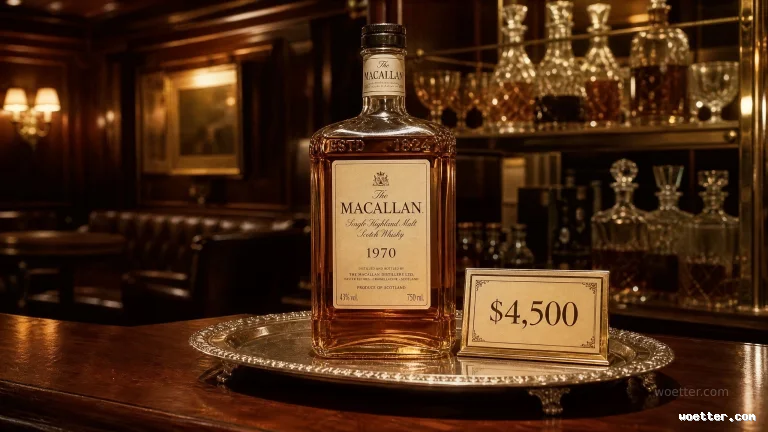
The phenomenon that names this economic anomaly originated in the spirits market in the second half of the twentieth century. The Scottish brand Chivas Regal found itself in a precarious position. Its whisky was of adequate quality, but sales were stagnant, and its Market Share was withering. The brand was trapped in what strategists call the Middle Market Trap—it wasn't cheap enough to compete on volume, nor expensive enough to attract the elite.
The board of directors made a decision that defied the business orthodoxy of the era. They did not alter the distillation process. They did not age the whisky for longer. They did not significantly change the shape of the bottle or the label. In a maneuver of pure positioning audacity, they simply doubled the retail price of the product overnight.
The result was a shock to financial analysts. Sales did not drop; they skyrocketed exponentially. By elevating the price to the levels of established luxury brands, Chivas Regal invoked the Chivas Regal Effect (also closely related to Veblen Goods or ostentation goods). Suddenly, the whisky became a status symbol. Executives began ordering it in upscale bars to signal success to their peers. The high price tag acted as a filter of exclusivity and an implicit promise of superior quality that consumers were desperate to believe. The value of the product did not determine its price; the price determined its value.
The Architecture of Irrational Pricing
Understanding the Chivas Regal Effect is only the first step; the true competitive advantage lies in the ability to orchestrate this perception deliberately within contemporary corporate operations. The application of this behavioral bias requires the construction of what we call an impenetrable Value Architecture.
For a client to agree to pay an irrational premium for a product or service, the company must eliminate any trace of direct comparison with low-cost competitors. This demands absolute mastery of Signaling Theory. The brand must send costly, hard-to-fake signals that corroborate the new pricing. This involves everything from the immaculate aesthetics of the user interface on digital platforms to the rigorous service protocols in High Ticket B2B environments.
If your company operates across multiple locations, including major hubs like New York or São Paulo, understanding regional dynamics while maintaining brand integrity is paramount. Applying premium pricing requires not just a shift in the Pricing Model, but a drastic elevation in the entire Customer Success framework surrounding the delivery. The perception of luxury forgives no operational flaws. The market severely punishes those who charge like the elite but deliver like a commodity.
When More Expensive Means Better: The B2B Dynamic
The most common mistake made by agencies, consultancies, and technology firms is defensive pricing. When attempting to close a corporate contract, the instinct to reduce fees to "secure the deal" transmits a devastating message to the procurement board: desperation and lack of confidence.
In high-stakes corporate environments, decision-makers are not looking for the cheapest option; they are looking for risk mitigation. The executive hiring a cybersecurity software firm does not want to save ten percent on the department's budget; they want to ensure they will not be the one responsible for a data breach that destroys the company. When applying the Chivas Regal Effect in B2B, a substantially higher price acts as psychological insurance for the decision-maker. A premium price tacitly communicates: "We are the ultimate authority in this sector, we do not make mistakes, and we do not need to beg for your account." This posture generates a phenomenon known as Cognitive Dissonance in favor of the sale: the client justifies the high investment based on the premise that only the best solution would cost so much.
How to Apply the Chivas Regal Effect to Your Operations
Implementing this strategy is not an inconsequential act of altering price lists. It requires a methodical restructuring of your Go-To-Market approach. Follow the absolute rules for transitioning to premium pricing:
- Immediate De-anchoring: You must break your client's pattern of comparison. If you sell software, stop selling licenses per seat and start selling ROI transformation in blocks. The client must not be able to calculate your hourly/unit rate.
- Elevate Costly Signaling: The entire ecosystem surrounding the offer must smell like money. From the website design and the absence of grammatical errors to the simulated scarcity in meeting availability.
- Portfolio Pruning: You cannot be the most expensive brand in the market if you still maintain a Freemium plan polluting your positioning. Luxury demands the sacrifice of low volume and narrow margins. Destroy your entry-level options.
- Copywriting Alignment: The language must abandon the desperate persuasive tone and adopt a clinical, distant, and analytical posture. Premium products do not beg to be bought; they allow clients to invest in them.
The market is saturated with businesses fighting bloody wars at the bottom of the barrel, fighting over pennies while suffocating their margins and destroying their teams' morale. The alternative lies just above, in the layer of consumer irrationality. The courage to price aggressively and endure the initial friction separates volume operators from margin architects. Double the price. Lose half the clients. Work half the time. Profit substantially more.
Recommended Reading
Priceless: The Myth of Fair Value (and How to Take Advantage of It) by William Poundstone. A definitive treatise on how the psychology of price dismantles traditional notions of market and value.
True business leverage is not found in working harder, but in pricing better. If you wish to master the engineering of human behavior and transform your capital structure, the first step is to access the unfiltered analyses we share with our select group of readers. Subscribe to the newsletter and join the strategic elite.