
The corporate market idolizes motivation and romanticizes discipline. From leadership keynotes to the biographies of iconic founders, the dominant narrative suggests that high performance is the result of unwavering willpower, relentless stoicism, and a superhuman ability to force one's mind to execute difficult tasks every single day. This is, perhaps, the most expensive and inefficient lie perpetuated in the business world.
The cold, analytical truth, backed by decades of research in behavioral economics and neuroscience, is that motivation is an emotion, and emotions are statistically unpredictable. Discipline, on the other hand, is not an infinite character trait; it is a highly perishable biological resource. Relying on willpower to sustain high performance over the long term is an architectural failure. The day motivation ends and discipline fails is not a mere possibility; it is a mathematical certainty. To survive that day and continue delivering results, elite professionals abandon conscious effort and construct rigorous execution systems.

The Fallacy of Conscious Effort and the Biology of Exhaustion
To understand why we desperately need execution systems, we must first diagnose the structural flaw of the traditional, individual-focused model. When an executive or entrepreneur sets an ambitious goal, the initial enthusiasm masks the true energetic cost of the journey. This enthusiasm, governed by the Affect Heuristic, creates a dangerous illusion of control.
The Phenomenon of Ego Depletion
Behavioral economics and cognitive psychology introduce us to the concept of Ego Depletion. Popularized by psychologist Roy Baumeister, the term describes the strictly limited capacity of human willpower. Every time you make a decision, resist a temptation, suppress an emotional reaction, or force your focus onto an arduous task, you consume a measurable amount of glucose in your prefrontal cortex.
When this energy tank empties, decision fatigue sets in. In this state of decision fatigue, the human mind defaults to factory settings: the law of least effort. The brain, seeking caloric conservation, begins taking hazardous shortcuts. This is precisely why top executives sign poor contracts at the end of the day, professionals break their diets at night, and complex projects are abandoned after weeks of sustained stress.
Demanding uninterrupted discipline from yourself is the equivalent of trying to run a marathon while holding your breath. True high performance cannot be anchored to a variable that degrades exponentially throughout the day. This is where a paradigm shift becomes mandatory: we must pivot from managing effort to architecting the environment.
Execution Systems: The Engineering of Inevitability
If decision fatigue is the ultimate enemy, the systematic reduction of decisions is the only viable weapon. Execution systems are operational and psychological infrastructures designed specifically to remove choice from the equation. An efficient system does not ask if you feel motivated; it simply dictates your behavior through carefully calibrated environmental friction.
The objective of engineering robust execution systems is to transfer the heavy lifting from System 2 (slow, analytical, and energy-consuming) to System 1 (fast, automatic, and highly efficient), concepts brilliantly mapped out by Daniel Kahneman. When a behavior becomes systemic, it requires zero willpower to execute.
Friction Cost and the Power of the Default Bias
At the very core of execution systems lies the ruthless mastery of the Friction Cost. In behavioral economics, it is widely documented that humans are deeply susceptible to environmental friction. If there is one extra step, one additional click, or one micro-decision to be made before taking action, the probability of execution plummets.
Conversely, the Default Bias dictates that people overwhelmingly tend to accept the pre-selected option. Architects of high performance leverage the Default Bias relentlessly to their advantage. They do not wake up and decide what to do; their calendar has already decided. They do not choose when to focus; website blockers and isolation routines have already eliminated the alternatives. The environment makes the choice for them. Discipline has been successfully outsourced to the system.
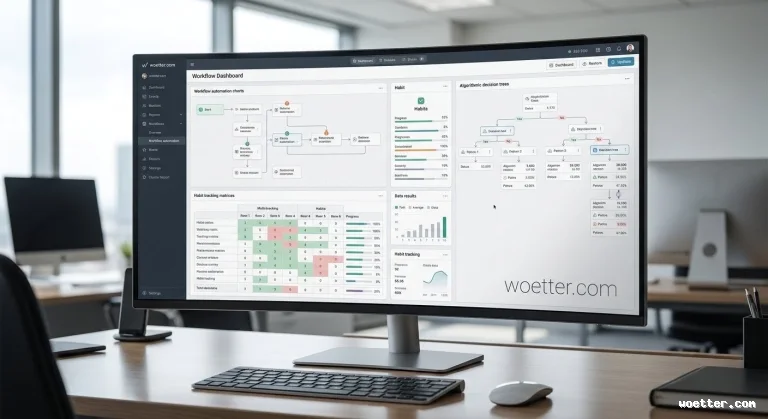
Case Study: The Automation of Strategic Execution in Elite Operations
To illustrate the irrefutable power of execution systems, let us analyze the operational structure of financial trading floors and their direct application to top-tier executive routines.
Professional traders deal with levels of stress and decision fatigue that would paralyze a standard individual within minutes. How do they maintain unwavering high performance? They do not rely on raw courage or emotional discipline; they operate strictly within pre-programmed algorithms and rigid risk parameters (Hard Stops).
If a trading position hits a loss of 'X', the system automatically liquidates the asset. There is no meeting, no pondering, no need for willpower to accept the loss. The decision was made a priori, during a moment of cognitive clarity (low Ego Depletion), and hardcoded into an execution system.
When we transpose this framework into corporate leadership, the parallel is direct. A professional dedicated to high performance designs their day so that the most cognitively demanding tasks occur in the early hours, when decision fatigue is nonexistent. Communications are aggressively batched. The decision of "to do or not to do" is completely removed. The environment functions as a train track, not an open road. By eliminating the daily burden of choice, the professional preserves their analytical capacity for the rare, high-stakes strategic decisions that actually require human judgment.
The Geometry of Organizational and Personal Constancy
Implementing execution systems creates a long-term compounding effect that sheer willpower could never hope to match. Motivation generates sharp peaks of productivity inevitably followed by deep valleys of burnout. Systemic architecture generates a constantly elevated, reliable, and progressive baseline.
For leaders operating in complex markets globally, the adoption of rigid processes that actively combat decision fatigue has become the silent metric separating scalable operations from bottlenecks dependent on individual talent. If your company or your daily routine relies on "waking up with the drive to make things happen," your business model is inherently bankrupt. High performance is an industrial process, not a spontaneous work of art.
Choice Architecture Principles for Professionals
To permanently migrate from the discipline model to the execution systems model, you must adopt three non-negotiable rules:
- The Rule of Advanced Decision: Never decide in real-time what can be decided 24 hours in advance. Nightly planning completely removes the need for morning planning, preserving valuable cognitive glucose.
- Everyday Standardization: Wear similar clothes, eat standardized meals during work hours, and group meetings into identical blocks. Every minor variation in your day is a hidden tax paid directly to decision fatigue. Ruthlessly reduce entropy.
- Difficulty Engineering: Make the desired behavior the path of least resistance and make destructive behavior near-impossible. If you shouldn't check email in the morning, the app must be blocked at the router level, not just closed on your screen. Sustaining high performance requires that you treat your "future self" as an undisciplined employee who requires strict systemic supervision.
The Analytical Awakening
The day motivation ends and discipline fails is coming. It might be next Tuesday under the crushing pressure of a missed deadline, or next quarter following an exhausting corporate merger.
If, on that specific day, your progress is anchored solely to your mental fortitude, you will collapse, and your work will stagnate. However, if you have invested your time designing relentless execution systems, the machine will continue to turn. The automated email will be sent, the calendar block will force you to focus, and the environment will dictate your productivity.
Stop trying to be mentally tougher. Start being architecturally smarter. True mastery in business and in life lies in the cold recognition of our own biological fragility and the construction of frameworks that make us bulletproof against it. The war against decision fatigue is not won through rest; it is won through the brutal elimination of options. The path to genuine, enduring high performance is, paradoxically, the absolute surrender to the system you have built.
Recommended Reading
- Thinking, Fast and Slow – Daniel Kahneman
- Nudge: Improving Decisions About Health, Wealth, and Happiness – Richard H. Thaler & Cass R. Sunstein
- Willpower: Rediscovering the Greatest Human Strength – Roy F. Baumeister & John Tierney
Is your team held hostage by seasonal motivation? Subscribe to our newsletter and receive elite, behavioral economics-based strategies to bulletproof your corporate execution.
