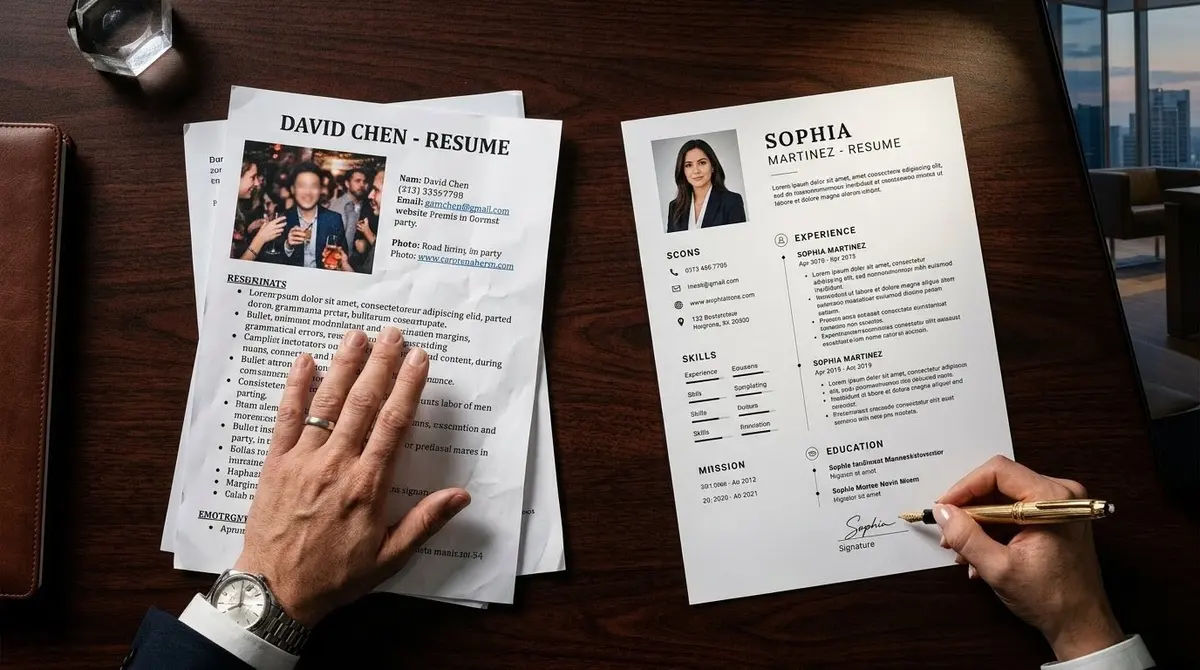

The Triumph of Packaging: A Strategic Essay on Design and Decision Making
There is a moralistic cliché that destroys the profit margins of thousands of companies every year: the belief that “quality speaks for itself”. Brilliant engineers, elite consultants, and genius programmers frequently ignore the design and presentation of their services, believing the client will be rational enough to see the technical quality of what they are buying. Behavioral economics proves this rationality is a myth. The human brain is a machine of shortcuts and snap judgments. We are biologically programmed to be victims of a first impression. And in business, the tool that transforms this first impression into money is called the halo effect.

The Perfection Bug: The Halo Effect
To master brand positioning, we must understand this flaw in the brain’s source code. The halo effect is a cognitive bias mapped by behavioral economics where our overall impression of a person, product, or brand influences how we judge the specific traits of that same entity.
In practical terms: if we find a package beautiful, our brain automatically, and without any logical proof, assumes the product inside is of high quality, reliable, and worth the price tag. The “halo” (the aura of aesthetic perfection) spreads and contaminates all other attributes.
If a consultant enters a meeting room in a flawless suit and hands over a PDF with luxury design, the first impression activates the halo effect. Even before reading the proposal, the client assumes the consultant is smart, organized, and ruthless in technical execution. Behavioral economics explains that we use visual beauty as a heuristic shortcut for competence.
The Master Case Study: ATMs in Japan
If you think the halo effect only applies to people or clothes, look at what happened in the universe of usability engineering. In 1995, researchers Masaaki Kurosu and Kaori Kashimura conducted a fascinating study at the Hitachi Design Center in Japan.
They tested 26 different ATM (Automated Teller Machine) interfaces with users. The secret of the experiment? All 26 machines had strictly the same functions and the same number of buttons to perform withdrawals. The only difference was that some screens had a visually appealing design, while others were poorly laid out and “ugly.”
The result shocked software engineers. Users reported that the aesthetically pleasing machines were “easier to use” and “worked better”.
Behavioral economics calls this the Aesthetic-Usability Effect. The visual first impression was so strong that it literally made users “forgive” flaws and deem the system superior. The halo effect blinded rationality. This is exactly why a client prefers to buy an inferior competitor’s software that has a stunning design, rather than your technically superior software with a dated interface.

How Aesthetics Dictates Your Price (Premium Pricing)
Many professionals treat visual design (of their presentations, websites, and materials) as the “icing on the cake.” But in modern business architecture, design is the flour. Without an impactful first impression, your technical competence isn’t even evaluated. Behavioral economics decrees that the halo effect acts as an invisible price anchor.
1. The Ugly Proposal Paradox:
When you send a $100,000 proposal in a Word document with standard Arial font, crooked margins, and no cover, the client’s brain screams: “Carelessness.” Your price will look like a robbery. If the exact same proposal, with the exact same words, is delivered in a masterfully designed Pitch Deck, the client will think: “This is an elite firm.” The halo effect justifies the high ticket.
2. The Transfer of Authority:
If you are a small B2B company and your website looks like it was built in 2005, the client will assume your working methods and technology are also stuck in 2005. The visual first impression contaminates the perception of your technical capability.
Implementation Framework: Hacking the First Impression
To stop losing deals to worse (but prettier) competitors, you need to bulletproof your service packaging today:
- Audit Your Touchpoints: What does the client see first? Your Instagram? Your website? The cover of your proposal? Ensure they all have a minimalist, clean aesthetic that transmits surgical authority.
- Eliminate Visual Friction: Behavioral economics teaches that the brain confuses “visual complexity” with “difficulty of execution.” Squeezed text and lack of breathing room (white space) in your documents make the client think your service is difficult and exhausting before they even sign the contract.
- Use Design to Hide Flaws: As proven by the Hitachi ATMs, users are far more tolerant of errors in systems or processes that are aesthetically pleasing. The halo effect works as a crisis shock absorber.
📚 Recommended Reading
To dive into the hidden dynamics of visual perception and decision-making influence:
- “The Halo Effect… and the Eight Other Business Delusions” – Phil Rosenzweig: A phenomenal book that deconstructs the illusion that a company’s financial success metrics are judged purely rationally by analysts.
- “The Design of Everyday Things” – Don Norman: The usability bible that explains the neurological connection between visual beauty and the mechanical sensation of a product working perfectly.
Strategic Conclusion
Popular wisdom says not to judge a book by its cover. Capitalist wisdom says to invest heavily in a cover so stunning that the client feels obligated to buy the book without even reading the synopsis. Behavioral economics proves that reason is a slave to emotion, and emotion is fed by the eyes. If you are an elite professional, it is time to align the genius of your content with the mastery of your packaging. Design is not a vanity expense; it is the greatest pricing lever your business possesses.
Are you losing millionaire clients because your service packaging looks cheap? Subscribe to the newsletter in the field below, receive our weekly strategic essays, and discover how to elevate the design of your materials to charge double tomorrow.