In the high-performance corporate chess game, the product you sell is frequently less important than the lens through which the client views it. The illusion of market rationality suggests that financial decisions are made based on the objective, mathematical utility of an offer. The clinical reality of Behavioral Economics, however, proves that the human brain does not evaluate information in an isolated vacuum; it evaluates the context, the anchors, and, primarily, the presentation structure.
This fundamental principle is termed the Framing Effect. Mastering the Profit Frame is not a peripheral copywriting tactic; it is the core engineering of sales conversion and profit margin defense. Altering the semantic packaging of an offer without changing the underlying product can represent the difference between instant rejection and the acceptance of premium pricing.

Prospect Theory and Choice Architecture
The Framing Effect was methodically dissected by Daniel Kahneman and Amos Tversky in their seminal Prospect Theory. The researchers' central discovery dismantled the classical pillar of economics: they proved that individuals value gains and losses in a brutally asymmetric manner.
The psychological pain of losing a thousand dollars is, on average, twice as intense as the joy of gaining a thousand dollars. This phenomenon, known as Loss Aversion, is the primary engine of the Framing Effect. Consequently, the way a transaction is molded — as a gain to be secured or a loss to be avoided — dictates purchasing behavior.
The classic example in the food industry is the ground beef experiment. When presented as "80% lean," consumers rated it as healthy, high-quality, and were willing to pay a premium. When the exact same product was labeled as "20% fat," acceptance plummeted, and the perception of quality crumbled. The math was identical; the choice architecture was diametrically opposed.
The Engineering of Framing in Pricing Strategy
In global B2B negotiation rooms, the Profit Frame separates companies that operate as commodities from those that dictate market tempo. Pricing is never a static number; it is a relative narrative.
The Rule of Relative Anchoring: A high price only seems high when compared to a lower benchmark. The function of the Framing Effect is to alter the comparison benchmark within the client's mind.
Consider the architectural difference between applying a "Discount" versus applying a "Surcharge." If a merchant charges a base price for cash payments and adds a fee for credit cards, consumers react with fury to the "penalty" (activating Loss Aversion). If the same merchant sets the higher credit card price as the default and offers a "cash discount," clients enthusiastically accept the structure (activating the gain frame). The final cash flow for the business is rigorously identical.
Case Study 1: The B2B SaaS Subscription Model
The Software as a Service (SaaS) sector is the greatest modern laboratory of the Framing Effect. Most pricing architectures present a monthly option (e.g., $100/month) and an annual option (e.g., $1000/year).
Companies employing elite copywriters do not frame the annual plan as "Pay $1000 now." They utilize fractional framing: "Only $83 a month (billed annually)" coupled with a loss-focused Profit Frame: "Don't lose out on 2 free months."
The human mind processes the number "83" as the core of the decision, contrasting it with the "100" of the monthly plan. The friction of the total upfront payment ($1000) is overshadowed by the narrative of recurring savings and the aversion to "leaving money on the table." This semantic manipulation substantially elevates the Lifetime Value (LTV) and the upfront working capital of the operation.
Case Study 2: The Economist's "Decoy" Strategy
The experiment conducted by Dan Ariely with The Economist's pricing table is the gold standard for combining the Framing Effect with the Decoy Effect.
The initial offer presented:
- Digital Subscription: $59.
- Print Subscription: $125.
- Digital + Print Subscription: $125.
Option 2 (print-only for $125) seemed like a gross market error, as no one in their right mind would choose it over option 3. However, the presence of option 2 was not meant to generate sales; it existed purely to mold value perception. Option 2 framed option 3 not as a high cost of $125, but as an absolute steal, where the reader was "getting the digital version for free." When the decoy option was removed, sales plummeted towards the cheapest digital-only plan. The Profit Frame controlled revenue migration.
High-Performance Tactical Applications
To dominate the Framing Effect and structure your Profit Frame, execute the following directives:
1. Transform Costs into Protective Investments:
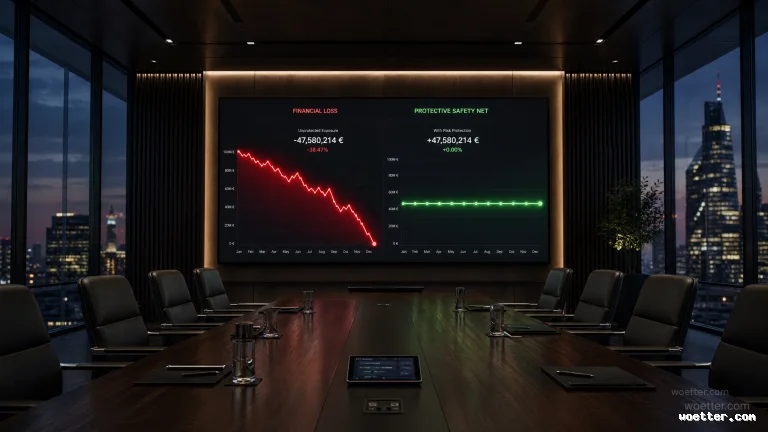
In high-cost B2B services, never frame your service as an expense on the client's income statement. Frame it through the lens of Loss Aversion. A regulatory compliance consultant does not sell "legal adherence for $50k." They sell "the prevention of a $2 million fine and operational shutdown." The frame migrates from a cost center to corporate insurance.
2. The Magic of Temporal Translation:
A service that costs $3,650 a year terrifies the primate brain. Framed as "$10 a day — the price of a latte," the value passes the mind's analytical filter. Fractioning the financial pain minimizes the limbic response of repulsion.
3. Bundling vs. Unbundling:
When there are multiple gains or benefits in your offer, separate them (Unbundling). The brain prefers receiving five small $20 gifts over a single $100 gift. Conversely, when there are multiple costs or pains for the client, group them into a single invoice (Bundling). It is mathematically and psychologically preferable to suffer one large financial pain at once rather than bleeding slowly through five separate charges.
The Art of Presenting Reality
The market is not defined by mathematical fairness, but by architected perception. The Framing Effect demonstrates that the objective truth of a product is irrelevant until it is translated through a persuasive frame.
The Profit Frame demands that business architects stop optimizing only product features and begin obsessively optimizing the lenses through which the offer is consumed. By mastering the presentation of gains and the isolation of losses, conversion ceases to be a lucky event and becomes a mathematical consequence.
Recommended Reading:
- "Thinking, Fast and Slow" by Daniel Kahneman.
- "Nudge: Improving Decisions About Health, Wealth, and Happiness" by Richard H. Thaler and Cass R. Sunstein.
If your company possesses a superior product but faces price resistance, the problem is not the value, it is the frame. Subscribe to our newsletter and join the elite who master the invisible levers of Behavioral Economics.