
The End of the Saturated Niche: A Strategic Essay on Differentiation and the Sweet Spot
In the strategic planning of new businesses, there is a paralyzing excuse exhaustively repeated by founders and marketing directors: "Our niche is already saturated." The assumption is that the competition is so fierce there is no oxygen left for new players. Behavioral economics teaches us, however, that saturation is an illusion created by homogeneity. Markets are not full of options; they are full of copies. The amateur's mistake is entering an aggressive market and trying to "shout louder" than the leader. The elite strategist's move is to apply what Joe Pulizzi dubbed content tilt: finding an angle of approach that instantly makes current competition irrelevant. And there is no Case Study more genius and bizarre to prove the power of content tilt than the rise of Chili Klaus.

The Red Ocean: The Mistake of Doing "More of the Same"
If you type "hot pepper challenge" into YouTube or TikTok today, the algorithm will return millions of videos. The industry standard is identical: someone buys a Carolina Reaper pepper, the camera shakes, the person sweats, screams, curses, cries, and begs for milk. It is content purely focused on chaos, pain, and physical endurance.
If you wanted to start a company in this market today, what would you do? Would you buy an even more lethal pepper? Would you shout louder? If you tried to compete on those terms, you would be crushed by invisibility. Behavioral economics proves that the human brain ignores repetitive patterns (Habituation).
But Claus Pilgaard, a Danish musician, looked at this hyper-saturated market and applied the engineering of content tilt.
The Engineering of the Tilt: Pain Transformed into Art
Claus is not a professional "pepper eater" or a fitness influencer. He is an artist. He found his sweet spot by crossing two unlikely variables: a Passion for Peppers and Competence in Artistic Performance.
While the competition focused on screaming and mess, Claus tilted the communication to the opposite pole: Extreme Order and Sophistication.
The Visual Architecture: He doesn't record in his messy kitchen. He wears tuxedos, tailored suits, and uses dramatic lighting.
The Language (Copywriting): He doesn't scream "This burns so much!". Even while sweating and suffering, he describes the "fruity notes" and the "earthy, citrusy aftertaste" of the pepper, like an elite sommelier evaluating a $5,000 French wine.
The Contrast (The Apex of the Tilt): His most famous and genius video shows him conducting the Danish National Symphony Orchestra. The classical musicians swallow the pepper and try, with tears in their eyes, to flawlessly continue playing the piece Tango Jalousie.
Consumers don't watch Chili Klaus to see "if he can handle the pepper." Consumers watch for the artistic tension between the serenity of classical music and the biological collapse happening on stage. This is absolute content tilt. He changed the category from "Internet Physical Challenge" to "Refined Cultural Entertainment."
Monetizing the Tilt: From Views to a B2C Empire
Where do most fail? Most build an audience and try to make money selling cheap t-shirts or relying on pennies from YouTube ads. Claus Pilgaard executed the Content Inc. model to perfection.
Because his content tilt built a brand associated with luxury, elegance, and stoicism, he didn't monetize the channel with cheap products. He created the Chili Klaus brand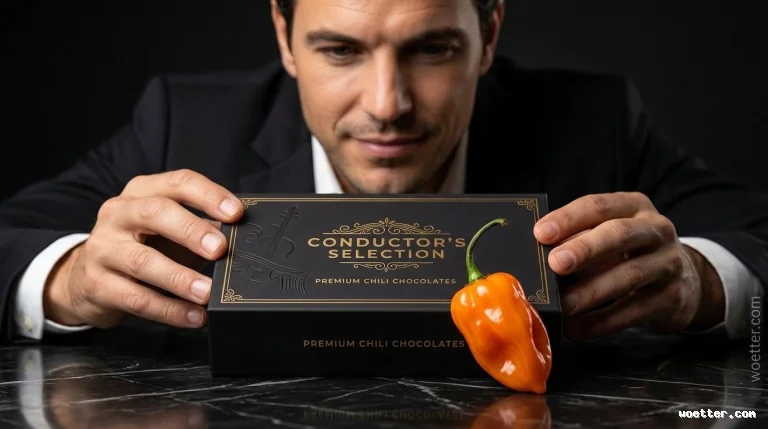
Premium artisanal hot sauces.
High-end chocolate infused with chili, sold in luxury boxes.
Corporate games (Chili Roulette).
Today, the brand exports consumer goods products to Scandinavia, Germany, and the Netherlands. The unusual content was merely the "Top of the Funnel" mechanism to build a real e-commerce and retail empire.
📚 Recommended Reading
To deepen your ability to observe saturated markets and find unexplored angles:
"Content Inc." - Joe Pulizzi: The step-by-step manual on how to build an audience using content tilt and then monetize it by creating specific products for that loyal base.
"The Tipping Point" - Malcolm Gladwell: Understand how small changes in the presentation of a product or content can generate epidemics of virality and mass adoption.
Strategic Conclusion
Chili Klaus's fundamental lesson for your business is undeniable: there is no saturated market; there is only content without Tilt. You can sell complex financial software, weight loss services, or tax consulting. If you package your pitch exactly like the competition does, your service becomes a cheap commodity and the fight will only be over who charges less. However, if you merge your sweet spot with a presentation the market has never seen—bringing sophistication where there is chaos, or simplicity where there is complexity—you abandon the price war and establish a monopoly of perception. The final test is this: if we remove your company's logo from your website, will the market know the content is yours? A man in a tuxedo eating a pepper is unmistakable. What about your company?
Do you want to stop competing for attention in a market where all your competitors look the same? Subscribe to the newsletter in the field below and receive our weekly strategic essays to learn how to design your Content Tilt and make your company unmistakable.
