Woetter.com
Mastering Zero-Click with Answer Engine Optimization
See how a B2B corporation overcame its acquisition crisis by reversing its classic strategy. This case study details the practical application of Answer Engine Optimization (AEO) to dominate Zero-Click Searches and become the primary source for Artificial Intelligence.
- See how a B2B corporation overcame its acquisition crisis by reversing its classic strategy.
- This case study details the practical application of Answer Engine Optimization (AEO) to dominate Zero-Click Searches and become the primary source for Artificial Intelligence.
The theory behind the evolution of search engines is compelling, but corporate practice reveals the true magnitude of the disruption. We will analyze the operations of a high-end B2B software organization that watched its acquisition metrics melt away amidst the advancement of Artificial Intelligence. The solution was not to double down on outdated tactics, but to orchestrate a profound methodological transition toward Answer Engine Optimization.

The Collapse of Traditional Organic Traffic
In the first quarter, the organization in question recorded a 42% drop in non-branded organic traffic. The executive team, afflicted by Confirmation Bias, initially blamed seasonal algorithm updates. However, a rigorous data audit revealed an undeniable pattern: page impressions on search platforms remained stable or were growing, but the click-through rate (CTR) had plummeted to historic lows.
Diagnosis: Victim of the Zero-Click
The diagnosis was clear. The organization was not losing rankings; it was losing behavioral relevance. Prospects were searching for complex corporate solutions, and Artificial Intelligence platforms were delivering the complete answer directly on the results page. These Zero-Click Searches stole the company's traffic, making the official website invisible in the user's decision-making journey. The Search Engine Optimization model had become an operational liability.
The Pivot to Answer Engine Optimization
The strategic response required demolishing the old editorial calendar. The board understood that fighting against consumer behavior, which now prefers the efficiency of Artificial Intelligence, would be futile. The corporate goal pivoted radically: stop fighting for clicks and start supplying the raw data for Large Language Models.
Implementing AI-Focused Information Architecture
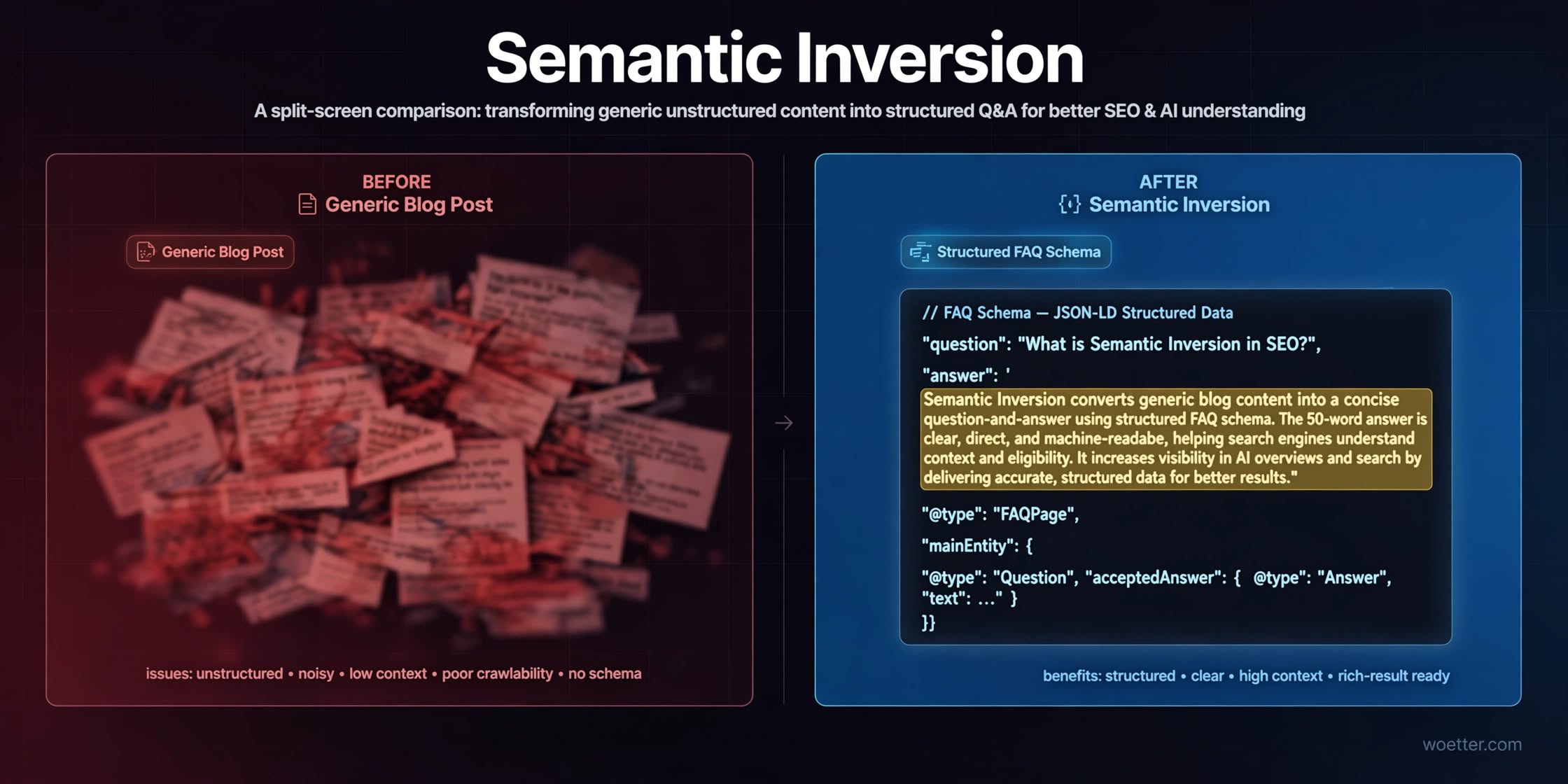
The tactical execution of Answer Engine Optimization involved three non-negotiable pillars. First, semantic restructuring. All long-form articles were rewritten to start with binary, direct answers to the market's most complex questions, formatted specifically for algorithmic extraction. Second, the aggressive implementation of Schema Markup to validate the company as the highest authority entity in its niche. Third, the elimination of empty marketing jargon in favor of precise quantitative data. Artificial Intelligence does not index rhetoric; it indexes structured facts.
Results and Behavioral Adaptation
Within six months, the company's success metric completely changed. They stopped reporting blog sessions and began measuring "AI Citation Frequency". The brand became the primary referenced source in synthetic answers concerning its operating niche.
Overcoming Loss Aversion for Vanity Traffic
The greatest challenge of this implementation was not technological, but behavioral within the board itself. Loss Aversion caused managers to fear abandoning vanity metrics. Strict architectural alignment was required to prove that being the trusted source for Artificial Intelligence in Zero-Click Searches generated high-intent leads, drastically reducing the sales cycle. Answer Engine Optimization proved to be the ultimate survival strategy.
Leitura Recomendada
- Competing in the Age of AI by Marco Iansiti and Karim R. Lakhani (A deep examination of how Artificial Intelligence changes the architecture and competitive foundations of corporations).
- Misbehaving: The Making of Behavioral Economics by Richard H. Thaler (Crucial for leaders who must manage the transition of beliefs and loss aversions on boards of directors).
- The Social Dilemma (An essential documentary on the algorithmic control of attention and how systems optimize user retention).
Success cases in the new economy are not built with metrics from the past. The market rewards the adaptable. If you want to master behavioral economics and modern business architecture to protect your organization, subscribe to our newsletter. Pure strategy, zero noise.