Skip to content
No results
  • Home
  • About
  • Case study
  • Marketing
  • Newsletter
  • Português
Eduardo Wöetter
Eduardo Wöetter
  • Case study, Marketing

How Nespresso Sells Coffee for $200 a Kilo (And You Think It’s Cheap)
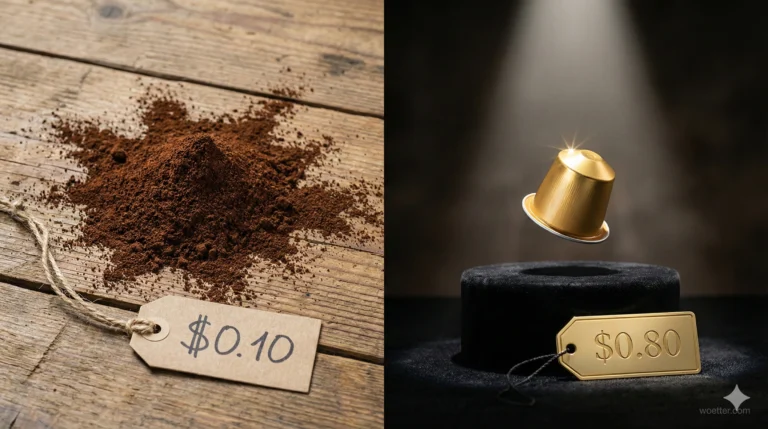
This image is a split-screen photograph comparing two presentations of coffee. The left half shows a messy pile of dark brown ground coffee powder spilled directly onto a rustic, worn wooden plank surface. A simple, rectangular cardboard price tag tied with twine rests near the pile, with "$0.10" handwritten in black marker. The lighting is natural and even. The right half is a high-contrast, luxurious shot. A single, gleaming gold Nespresso-style coffee capsule levitates magically above a black velvet pedestal. A focused beam of light from above makes the capsule sparkle. Below it, a polished gold metal price tag with engraved text reads "$0.80". The background is dark and out of focus, emphasizing the capsule as a premium product. The entire composition dramatizes the difference in perceived value between raw coffee and a packaged single-serving capsule.

Discover how Nespresso transformed a cheap commodity into a $160/kg luxury product using price reframing psychology.
  • Eduardo Wöetter
  • January 29, 2026
  • Marketing

The Decoy Effect: Why the Medium Popcorn Exists (And How to Use It to Sell More)?

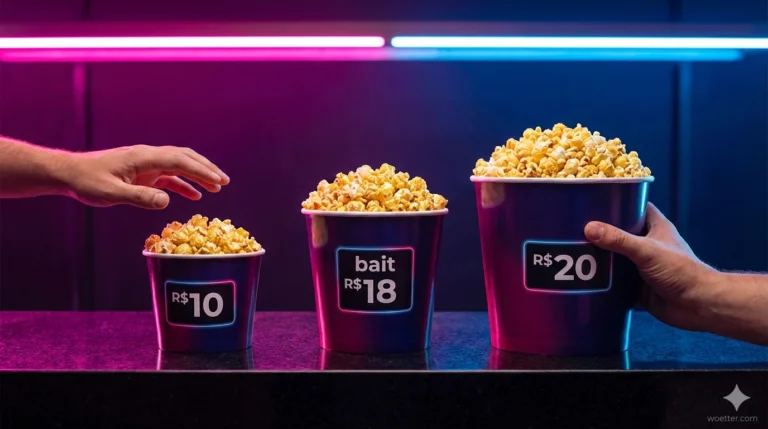
Uma fotografia de três baldes de pipoca de tamanhos diferentes alinhados em um balcão escuro de cinema. O balde pequeno à esquerda tem um rótulo com "R$ 10". O balde médio no centro tem um rótulo com "bait R$ 18". O balde grande à direita tem um rótulo com "R$ 20". Todos estão cheios de pipoca dourada. Uma mão esquerda hesita sobre o balde pequeno, enquanto uma mão direita agarra firmemente o balde grande. O fundo é escuro, iluminado por luzes de neon rosa e azul na parte superior.

Discover how the Decoy Effect manipulates your choices at the movies and learn how to use Price Anchoring to sell more expensive products using Dan Ariely's behavioral psychology.
  • Eduardo Wöetter
  • January 27, 2026
  • Case study, Marketing

From 9 Pages of Text to 1 Sentence: How Clarity Saved Apple from Bankruptcy

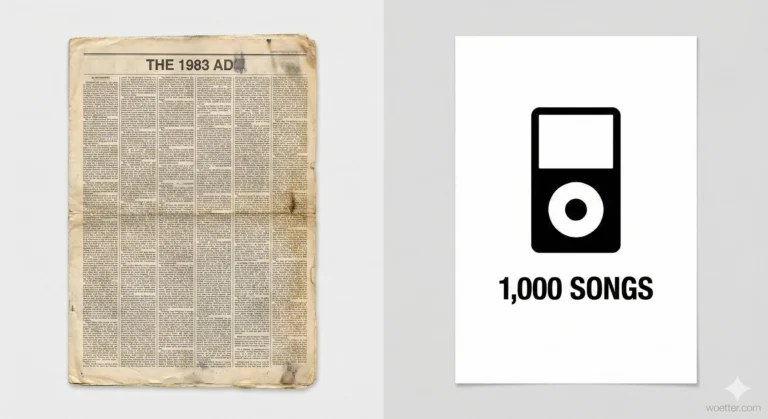
A split-screen image contrasting old and new media. On the left is a worn, yellowed newspaper page with the headline "THE 1983 AD" and columns of dense, illegible text. On the right is a sleek, white minimalist poster featuring a black silhouette icon of an iPod above the bold black text "1,000 SONGS".

In 1983, Apple failed with a 9-page ad. In 2001, it won with 5 words. Discover how clarity saved the company in this StoryBrand case study.

  • Eduardo Wöetter
  • January 22, 2026
  • Marketing

The Luke Skywalker Mistake: Why Your Brand Loses Sales by Trying to Be the Hero?

Does your brand try to be the hero? Discover the "Luke Skywalker Mistake" and learn how to use the StoryBrand framework to position yourself as the Guide your customer needs.

  • Eduardo Wöetter
  • January 20, 2026
  • Case study, Marketing

The $1 Million Cord: How Toyota Beat GM Using Systems (Not Goals)

See how the "Andon Cord" and Toyota's focus on Systems outperformed GM's production Goals. An efficiency lesson for 2026.

  • Eduardo Wöetter
  • January 15, 2026
  • Marketing

Why Your 2026 Goals Will Fail (and the System That Replaces Willpower)

Why do your New Year's resolutions fail? Learn the difference between Goals and Systems (based on Atomic Habits) and ensure consistent results in 2026.

  • Eduardo Wöetter
  • January 13, 2026
  • Marketing

The day motivation ends (and strategy begins)

For 2026, my invitation to you isn't "be more motivated."
My invitation is: be more strategic!
  • Eduardo Wöetter
  • January 1, 2026
  • Case study, Marketing

How Coca-Cola Invented Christmas (Or at least, the Santa you know)

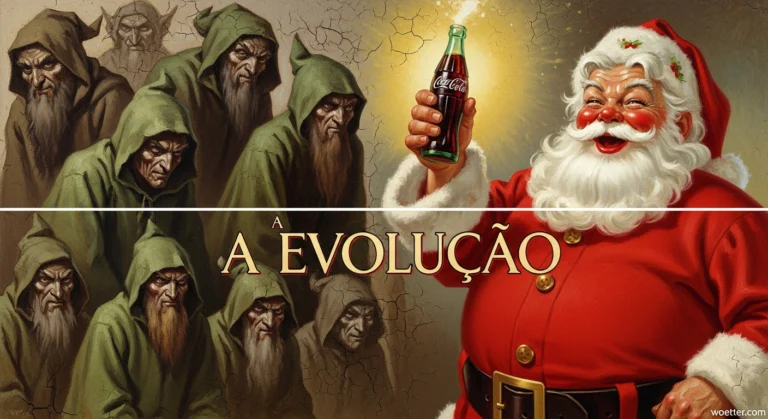
Discover how Coca-Cola helped shape the modern image of Santa Claus to solve a seasonality problem and created the biggest branding case in history.

  • Eduardo Wöetter
  • December 26, 2025
  • Marketing

The Neuroscience of Christmas: Why Your Brain Buys What It Doesn’t Need in December

Understand the psychological triggers (Scarcity, Reciprocity, and Halo Effect) that make Christmas the biggest retail date and learn how the brain decides to buy.
  • Eduardo Wöetter
  • December 23, 2025
  • Case study, Marketing

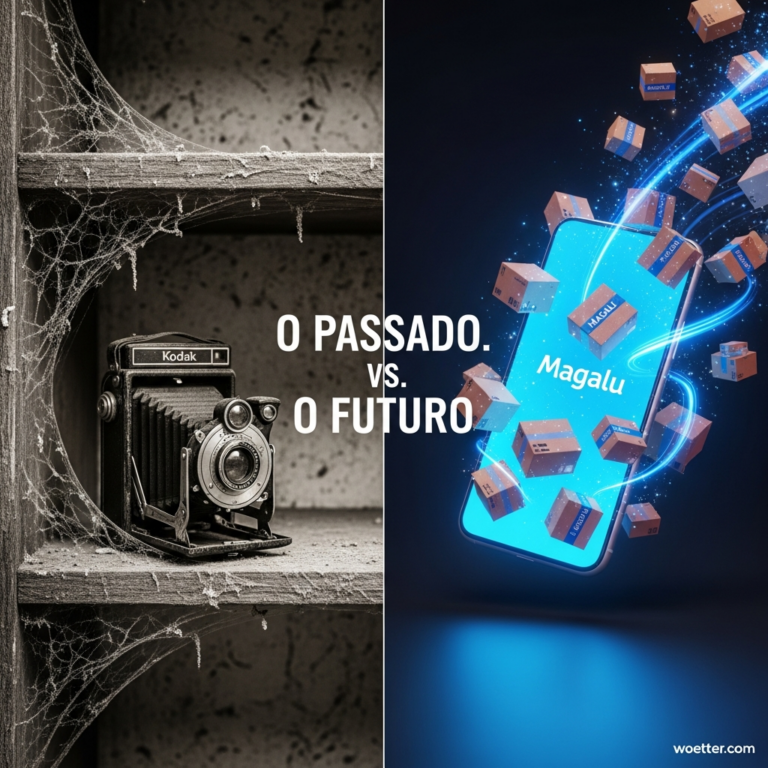
A Tale of Two Strategies: Why Kodak Died and Magalu Became a Giant

Imagem dividida verticalmente com o texto central 'O PASSADO. VS. O FUTURO'. O lado esquerdo, em tons de cinza e sépia, mostra uma câmera fotográfica antiga da marca Kodak, estilo fole, abandonada em uma prateleira de madeira coberta por espessas teias de aranha e poeira. O lado direito, vibrante e futurista, exibe um smartphone inclinado com a tela azul brilhante mostrando o logotipo 'Magalu'; dele saem rastros de luz azul neon e várias caixas de papelão flutuantes (encomendas), sugerindo velocidade e tecnologia.

A strategic comparison between Kodak's failure and Magazine Luiza's success. Understand why the fear of cannibalization destroys companies.

  • Eduardo Wöetter
  • December 18, 2025
Prev1 2 3Next
No more posts to load
Copyright © 2026 - WordPress Theme by CreativeThemes