
If you turn on the radio right now, you won’t hear Iron Maiden.
If you open a gossip site, you won’t see Iron Maiden.
To the “masses,” they are a band of old metalheads past their prime.
To the bank, they are a money-printing machine more efficient than most Fortune 500 companies.
Iron Maiden is living proof that Fans > Followers.
While pop artists need to “go viral” on TikTok every 3 months to avoid being forgotten (High Churn), Maiden has a 40-year career based on consistency and loyalty (Infinite Retention).
The Business of Identity (Eddie & Merch)
The band understood early on that they weren’t in the business of selling CDs. They were in the business of selling belonging.
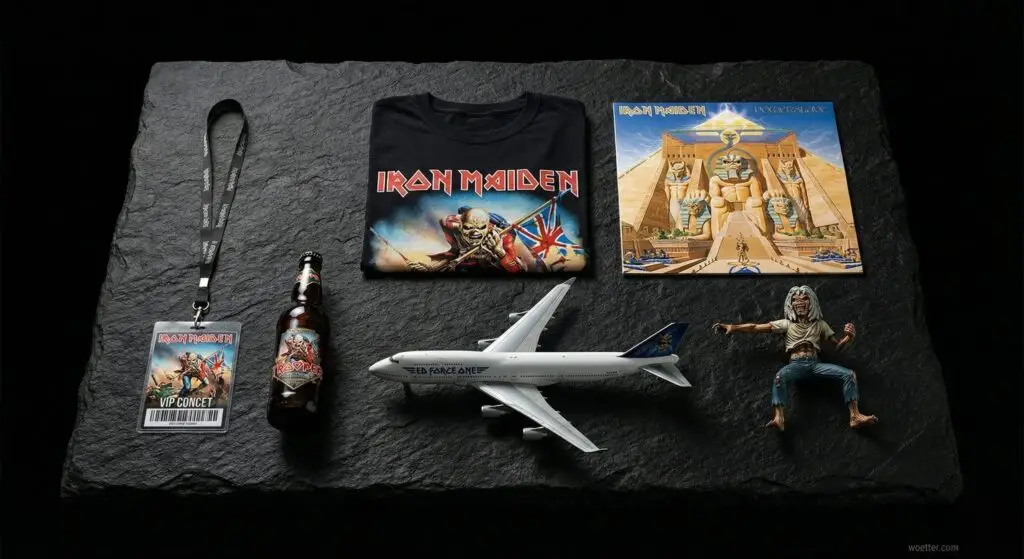
Their mascot, Eddie, isn’t a cartoon. He is a tribal crest.
When a fan wears a Maiden t-shirt, they aren’t saying “I like this song.” They are saying “I am a metalhead.”
This is Identity Branding.
Because of this, the LTV (Lifetime Value) of a Maiden fan is absurd.
The “pop” fan listens to the song on Spotify (generates $0.003).
The Maiden fan:
- Travels to see the show ($100+).
- Buys the tour t-shirt ($40).
- Buys the band’s beer, Trooper Beer ($10).
- Buys the band’s video game.
They applied the “1,000 True Fans” concept at scale. They don’t need 100 million casual listeners. They have a global legion of super-fans who buy everything.
Viral is Vanity, Loyalty is Sanity
The music industry (and current digital marketing) is obsessed with the “Short Head”—the top of the curve, the hit of the moment.
Iron Maiden dominates the Long Tail.
They ignored mass media. They focused on the niche.
And the niche reciprocated with eternal loyalty.
Lead singer Bruce Dickinson pilots the band’s own Boeing 747, Ed Force One, crossing the globe to play for fans in India, Brazil, and Japan.
My Analysis
What does Iron Maiden teach your business?
Stop trying to be the one who seeks pleasing everyone, going viral, chasing trends.
Be the Iron Maiden of your niche.
- Build a strong visual identity (Where is your “Eddie”?).
- Create products your fans are proud to use.
- Ignore anyone who isn’t your fan.
It is better to be a wealthy “Invisible Empire” than a broke “Viral Celebrity.”
Do you know who the ‘metalheads’ of your brand are?
Use our map to find them. (🎁 Exclusive for the newsletter’s subscribers)
Case Study Summary: Iron Maiden and the Fan Economy
This study analyzes how the band Iron Maiden built a “Cult Brand” focused on LTV (Lifetime Value) and retention, ignoring the mainstream.
The Strategy Pillars:
- The Paradox of Fame: The band is “invisible” in mass media but fills stadiums in 40 countries.
- Identity Monetization: They don’t just sell music (commodity); they sell identity through merchandising (Eddie the mascot), beer (Trooper), and experiences.
- The Lesson: It is more profitable to be deeply loved by a niche than vaguely known by the crowd.