Case Study: The Engineering of Scarcity and the Psychological Game of Rolex
Welcome to the deconstruction of the greatest masterclass in behavioral manipulation in luxury retail. Rolex doesn’t just sell watches; it sells the illusion of exclusivity. By aggressively applying artificial scarcity, the brand has built an empire. The rolex strategy proves that the greatest lever to increase your average ticket is not the product, but the barrier to entry, transforming watches into true veblen goods.
Empty Shelves: The Retail Theater
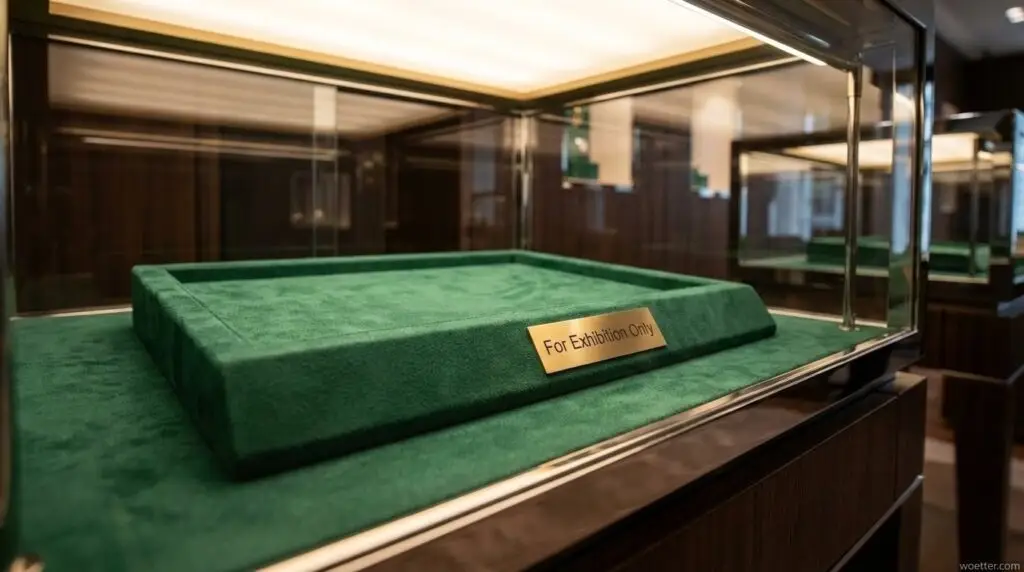
Anyone walking into an official Rolex boutique today encounters a bizarre scene: flawless, yet empty display cases. The reality behind this is manufactured artificial scarcity. Rolex produces about 1 million watches a year. They could meet demand, but the rolex strategy dictates that artificial scarcity is their greatest defensive moat.
By deliberately strangling the supply of sports models, artificial scarcity elevates the brand’s prestige. These watches behave as veblen goods, where demand rises along with the difficulty of purchasing. The empty windows are the center stage of the rolex strategy, a theater designed to inflate the value of their veblen goods.
The Privilege to Buy: The “Purchase History Game”
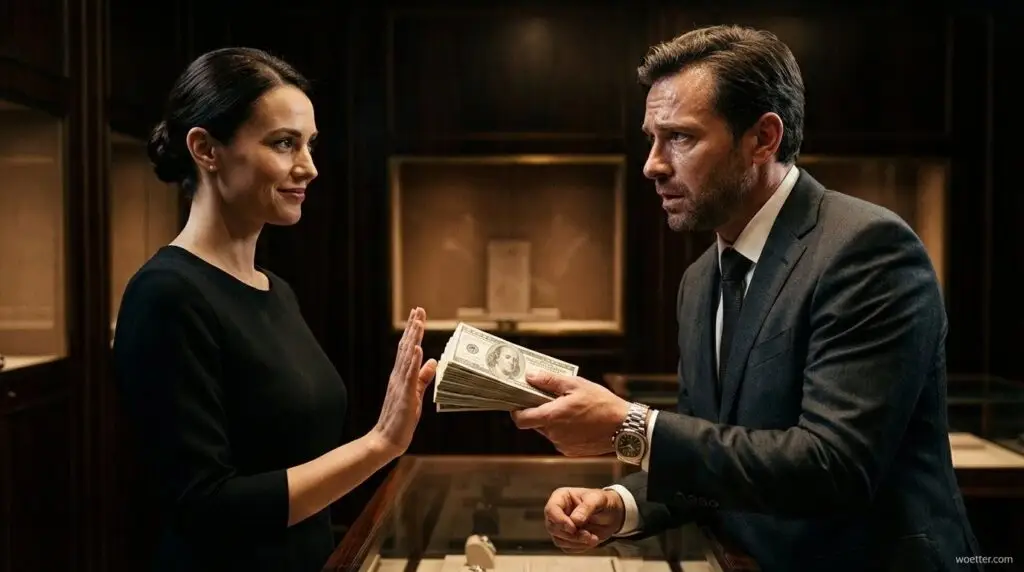
In the rolex strategy, money is no longer the barrier to entry. To buy a coveted model, the customer enters the “purchase history game”. Artificial scarcity forces the client to spend thousands of dollars on jewelry they didn’t initially want. As the rules of veblen goods dictate, the customer is induced to prove their loyalty. This rolex strategy filters buyers, using artificial scarcity to ensure that only the “worthy” have access to these veblen goods.
The Psychology of Desire: Cognitive Dissonance and Value
Why do billionaires accept this humiliation imposed by the rolex strategy? The answer lies in behavioral economics:
- The Veblen Effect: The watches are veblen goods. The constant refusal and artificial scarcity absurdly inflate the perceived value.
- Cognitive Dissonance: Spending time and money in the theater of the rolex strategy requires a high ego investment. Artificial scarcity ensures that when the sales rep finally calls, buying these veblen goods feels like a hard-earned victory.
The Grey Market: Validation of the Illusion
The grey market is not a problem; it is the greatest tool of the rolex strategy. Artificial scarcity works so well that used watches cost double the official price. Rolex doesn’t fight this because these stratospheric premiums validate that their watches are pure veblen goods. They justify the entire theater of artificial scarcity imposed by the rolex strategy, solidifying the brand.
The Lesson for Normal Businesses: Inverting the Dynamics
You don’t need to manufacture watches to use the rolex strategy or create veblen goods. The true lesson of artificial scarcity is the curation of access. Changing the dynamic to “Why should I accept you as a client?” transforms the perception of value. Artificial scarcity is not a defect; it’s a filter. When you apply the rolex strategy, your services become veblen goods in the client’s mind: the price is no longer an objection, it becomes the ticket to an exclusive club.

Is your company begging for clients or are clients begging for your company?
Subscribe to the newsletter in the field below, download our “VIP Client Filter” PDF and discover how to create barriers to entry that double your average ticket today.
What is Artificial Scarcity?
Artificial scarcity is a market strategy where the supply of a product is deliberately limited by its manufacturer, even when there is capacity to produce more.
What are Veblen Goods?
Veblen goods are luxury products whose demand increases as the price increases, contradicting the basic law of demand. The rolex strategy utilizes both concepts to signal exclusivity and social status, forcing the customer to build a purchase history.